Friday, November 11, 2011

Vocab Assignment

Vocab Assignment


Sfumato- Denotes a painting technique that there are no harsh outlines present. Which means that the areas blend into one another through miniscule brushstrokes, which makes for a rather hazy, albeit more realistic, depiction of light and color. Sfumato was something that da Vinci was very well known for.
 Public Domain image courtesy Wikimedia Commons
Leonardo da Vinci's Mona Lisa. 

Pentimento-  Describes a part of a picture that has been over painted by the artist which has become visible again, often as a ghostly outline, because the superimposed layer of pigment had become semi-transparent with age. Pentimento is used to tell if a painting was an original or not.
This is a portrait of Queen Elizabeth I, by an unknown artist in the late 1580s. It appears that there used to be a snake in her hand, rather that the feather that is painted there now.

Chiaroscuro- Refers to the modeling of volume by depicting light and shade by contrasting them boldly. This is one means of strengthening an illusion of depth on a two-dimensional surface. Chiaroscuro was an important topic among artists of the Renaissance movement.

Rembrandt Harmensz. van Rijn (Dutch, 1606-1669), Self Portrait at Twenty-Two 1628, Rijksmuseum, Amsterdam, Netherlands.


Contour Line -  Line that surrounds and defines the edges of a subject, giving it shape and volume. In contour drawing contour lines are used to represent subject matter in a three-dimensional quality, indicating the thickness as well as height and width of the forms it describes. 
Henri Gaudier-Brzeska (English, born France, 1891-1915), A Wolf. 1913, Tate Gallery, London.


Complementary Color Scheme - A set of colors that are used in an artwork that are directly opposite each other on the color wheel, such as red and green, blue and orange, and violet and yellow.  Christmas is a well known time when the red and green complementary color scheme is used a lot.
stilllifequickheart:

Marie-Lucie Nessi-Valtat
Still Life
20th century

Complementary color scheme - red/green with a splash of orange! I feel the need for a splash of violet, and it would be a secondary triadic color scheme.
Marie-Lucie Nessi-Valtat Still Life Twentieth Century


Analogous Color Scheme - A set of colors that are used in an artwork which include any two or more colors that are next to each other on the color wheel and are closely related. For example, blue, blue-green, and green all have the color blue in common. Families of analogous colors include warm colors (red, orange, and yellow) and the cool colors (green, blue and violet). Analogous colors are sometimes referred to as adjacent colors. Picasso's blue period used the blue analogous color scheme.
The Tragedy 1903 Pablo Picasso

Monochromatic Color Scheme - A piece of artwork consisting of only a single color or hue; may include it's tints and shades. Monochrome color schemes are used when things are in black and white as well.
Forward Retreat, 1986 Mark Tansey

Iconography - The pictorial representation of a subject, or the collected images (or icons) illustrating a subject - pictures, diagrams, etc. Iconography can mean the description of representational works of art. Also the study of subject matter and symbolism in the visual arts, as in collections of pictures constituting a complete visual record of a subject, or visual dictionary.
File:Hans Holbein the Younger - The Ambassadors - Google Art Project.jpg
The Ambassadors, Hans Holbein the Younger, 1533
This work's iconography remains the subject of debate.


Iconology- The branch of knowledge which deals with the subject of icons (or images); also the subject matter of this study, icons collectively, or as objects of investigation. 
File:Robert Campin - L' Annonciation - 1425.jpg
Robert Campin's Merode Altarpiece (1425-1428)
Iconology of this piece is still debated. Is Joseph making a mousetrap, reflecting a remark of Saint Augustine that Christ's Incarnation was a trap to catch men's souls?

Foreshortening - A way of representing a subject or an object so that it conveys the illusion of depth - so that it seems to thrust forward or go back into space. Foreshortening's success often depends on a point of view or perspective in which the sizes of near and far parts of a subject contrast greatly. 
Andrea_Mantegna_-_The_Dead_Christ.jpg (1536×1316)
Andrea Mantegna The Lamentation Over the Dead Christ 1480


Crosshatching - Creating tonal or shading effects with closely spaced parallel lines and lines that are placed at an angle across the first. 
File:Veronica.jpg
Albrecht Durer Veil of Veronica  1513

Modernism - An art movement characterized by the deliberate departure from tradition and the use of innovative forms of expression that distinguish many styles in the arts and literature of the late nineteenth and early twentieth centuries. 
Hans Hofmann  The Gate 1959

Postmodernism - Art, architecture, or literature that reacts against earlier modernist principles as by reintroducing traditional or classical elements of style or by carrying modernist styles or practices to extremes. 
Hans Haacke Blue Sail 1964

Picture plane - In perspective, the plane occupied by the surface of the picture - it's frontal boundary. When there is any illusion of depth in the picture, the picture plane is similar to a plate of glass behind which the pictorial elements are arranged in depth. Artists indicate teh supposed distance of subjects beyond the picture plane through the use of changes in the sizes of things, the ways they overlap each other, and (when subjects are placed on the depicted ground, as opposed to flying above it) by positioning them on the area taken up by the depicted floor, ground, or a body of water. 

Paul Cezanne Still Life with Apples 1890


Foreground, Middle ground, and Background - The three spatial attributes, foreground is at the bottom, and is close at hand. Middle ground includes the horizon and is in the middle of the picture, and the background goes to infinity and is shown at the top of the picture.
Andrew Wyeth  Christina's World 1948
Christina is in the foreground, the field is in the middle ground, and the sky and top of the hill are in the background.

Wednesday, November 9, 2011

Tuesday, November 8, 2011

Model Number 2

2 min poses

10 min pose

10 min pose

30 min pose

20 min pose

20 min pose

20 min Pose

60 min Pose

Saturday, November 5, 2011

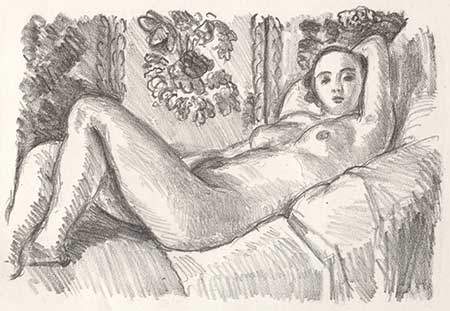
Henri Matisse

"Petite Aurore" Henri Matisse (1923)
Drawing
Henri Matisse has a way of capturing his subjects in light very well. I enjoy the style that is given to the piece. How there are different types of shading for different parts of the drawing. This really gives the piece depth. The face is a more precise shading technique while there are parts where it looks scribbled in. But I would not say that it is done with out though. Even though it looks like he did not meticulously hash out every type of fabric in the piece, the shading was definitely done with much thought and precision. 

Monday, October 31, 2011

First Model

2 Min Poses

2 min and 10 min poses

10 min pose

20 min pose

 20 min pose

Hour pose

20 min pose

Friday, October 28, 2011

Hans Hofmann's Legacy


"Art cannot result from sophisticated, frivolous, or superficial effects." - Hans Hoffman

painting
Untitled 
July 20, 1942. Wax crayon on paper
14x17 inches
Collection Solomon R. Guggenheim Museum, New York, Gift, Janet C. Hauck in loving memory of Alicia Guggenheim and Fred Hauck, 1992
 In the midst of all of Hoffman's work I came across this piece which made me stop and wonder. For some reason I have recently had a reconnection with wax crayons and to find this piece done with crayons compared to oil on canvas really stuck with me. Something that has always bugged me about people that I've known in my art classes is that certain people have natural ability but then do not use it with emotion or intent which makes their work seem vacant. The quote really speaks to this, in that art cannot come from talent alone. I think it is obvious that Hans Hoffman has talent, and can be sophisticated, but this piece is not as sophisticated as others. But I think this piece speaks to childhood, and also memories of the past. There are still elements sure as the barn and the silo that make this picture have meaning. Unfortunately it does not have a title and the interpretation is up to the viewer. This stands up to Hoffman's saying that "Painters must speak through paint, not through words." I think that we can see that  Hoffman is trying to convey some sort of nastolgia in this piece. 


This was one of the best figure drawings that I had done when this assignment was due. I had planned on using this when it was assigned.  I have choosen Hans Hofmann's quote: "The ability to simplify means to eliminate the unnecessary so that the necessary may speak." The goal of this exercise was to include the background elements as well as the figure. I can see that this is necessary in order to make the piece understandable. But I also did not want to take away from the figure, so not too much is added, only enough to understand what is going on.

Wednesday, October 5, 2011

Cezanne Quotes


       I consider myself lucky that I am fortunate enough to be able to travel in the world. On these travels I have had the chance to visit some of the most impressive art museums in the world, including the Ufrensi in Florence, the Met in NYC, and the Lourve in Paris. When I stumbled on Cezanne's quote, "the Lourve is the book in which we learn to read," I found it very invoking.  Being an artist I have always been very excited to be able to visit such fine museums of art. Unlike most of the other kids that I would go on tours with, I would want to learn more about pieces and more about what each piece meant. Unfortunately, I didn't have the time to really study any pieces at the Lourve when I was there, but I have been able to refer back to the pieces that I took pictures of. These pieces and references have inspired me to make the art that I have today. And I think that it is important that we draw from the masters that have come before us. I took studio classes in my high school and my teacher in junior year had made us copy images of Leonardo DaVinci's work of human figure studies, and then use the model of the human skeleton to fill in how the bones would actually be layed inside the body of the piece. I had found this work to be one of the most interesting and motivating pieces that I had worked on the entire year. I was motivated to live up to the artist that I was trying to examplify, and I think it is important to have that fire to motivate the work. Unfortunately I do not have a picture of the piece of work that I had done, due to my instructor wanting to keep it to reference to for future classes. I do have some pictures from the Lourve that I have recently been falling back to for inspiration for your viewing pleasure. 

The Louvre is the book in which we learn to read.
Paul Cezanne
This is obviously one of the most famous pieces at the Louvre. And one of the most well known portraits by DaVinci, or any artist. I mentioned DaVinci before, so this is also another piece that I look up to. I also like to think that one day I might have created something so famous that they have two barricades and guards at all times surrounding it. 

This is the "The Raft of the Medusa" by Theodore Gericault which I have always had a lot of respect towards. Seeing the piece in person was magnificent, and this image of it does not do it any glory. The ways the the beings interacted with each other was very important to me to notice, because it is the interacts that make it seem real.

Something that I have always believed is that everything has color, no matter what. If you can see it, it has color, because color is light. I was reading a book when I was younger about a painting class. It wasn't a book particularly about art, but rather a book I was just reading for fun. But it had a bit of art in it. In the book an art teacher gave the class an egg, a white egg, and a palate of paints which did not have black and did not have white. The main character in the book immediately asked how she was supposed to paint a white egg with out black or white. The teacher told her that something that seems white might not always just be white. You have to look closely to be able to see that there are colors even within the brightest whites and the darkest blacks. Although this was not directly told to me, and did not happen in my life it has stuck with me for many years. Which is why Cezanne's quote "There is no model; there is only color," stood out to me.

There is no model; there is only color.
Paul Cezanne

The day is coming when a single carrot, freshly observed, will set off a revolution.
Paul Cezanne

We are always faced with magnificent work that was based on something that happened in history or something that was defying of other times. In this quote I like that Cezanne is stating that something as simple as a carrot can define a new era. The thought that something so small can make such an impact really inspires me. It gives me a challenge to find something that other people have left unnoticed. This is why I think that everything should be examined fully in order to get the most out of it. It's as if I'm trying to find a needle in a haystack.